A fan-built tribute to A Nightmare on Elm Street - history, films, artwork and free downloads.
Welcome to Elm Street
Find Out The Truth
Hidden links to Freddy's History on this page
Deeper Into the Nightmare
Learn the Truth of the Elm Street History
Freddy’s Bio


The Complete History of Freddy Krueger
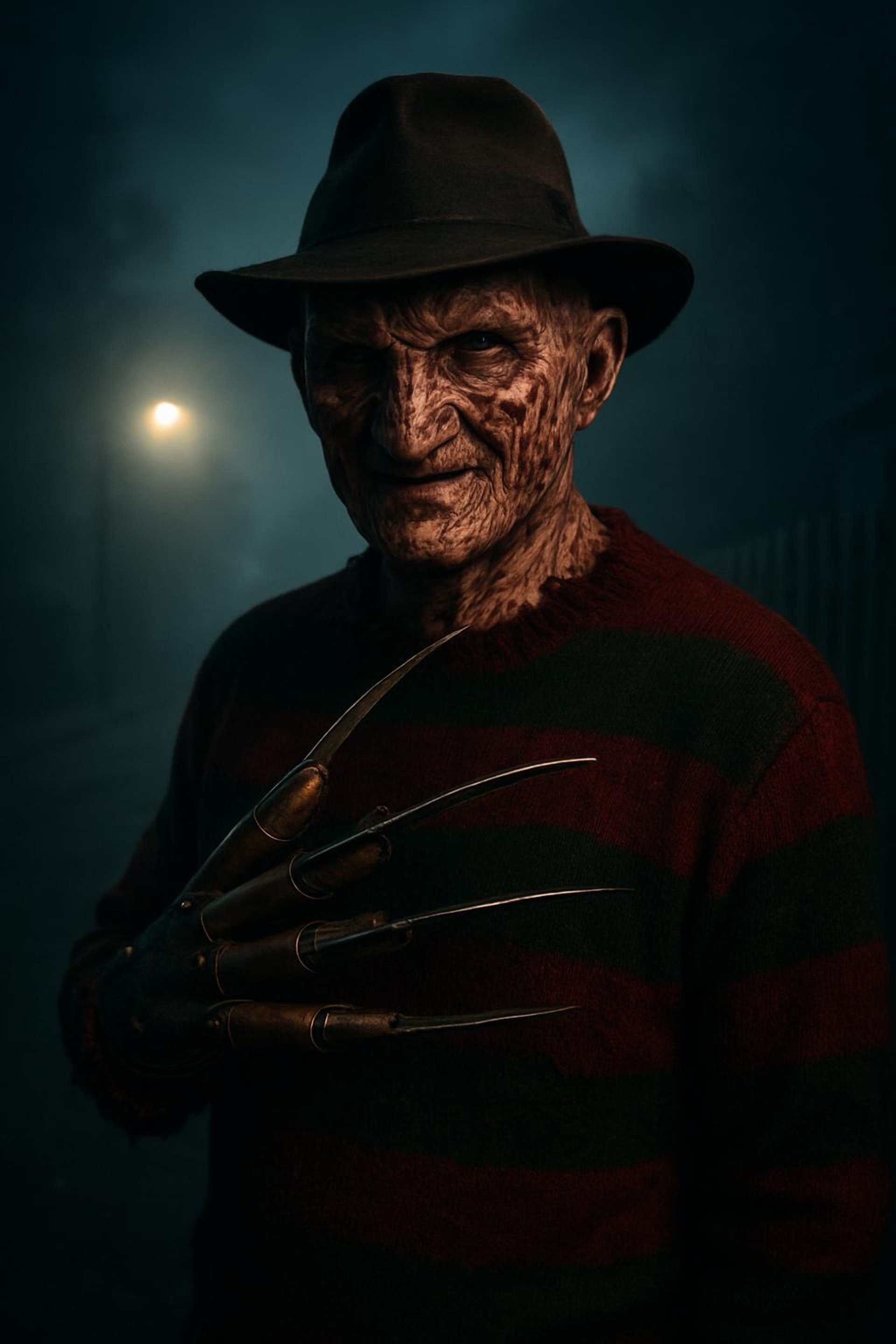
Few characters in horror history have become as recognizable as Freddy Krueger. With his burned face, striped sweater, brown fedora, razor-fingered glove, and unmistakable sense of humor, Freddy transformed the simple idea of a nightmare into one of cinema's most enduring horror concepts.
But Freddy wasn't always a supernatural killer. His story begins long before he ever entered Nancy Thompson's dreams. Across the A Nightmare on Elm Street films, audiences learn about his childhood, his crimes, his death, his supernatural resurrection, and the mysterious forces that allowed him to return from the grave.
This is the story of Freddy Krueger.
Before Freddy Became a Nightmare
Freddy's early life is explored primarily in A Nightmare on Elm Street 5: The Dream Child and Freddy's Dead: The Final Nightmare.
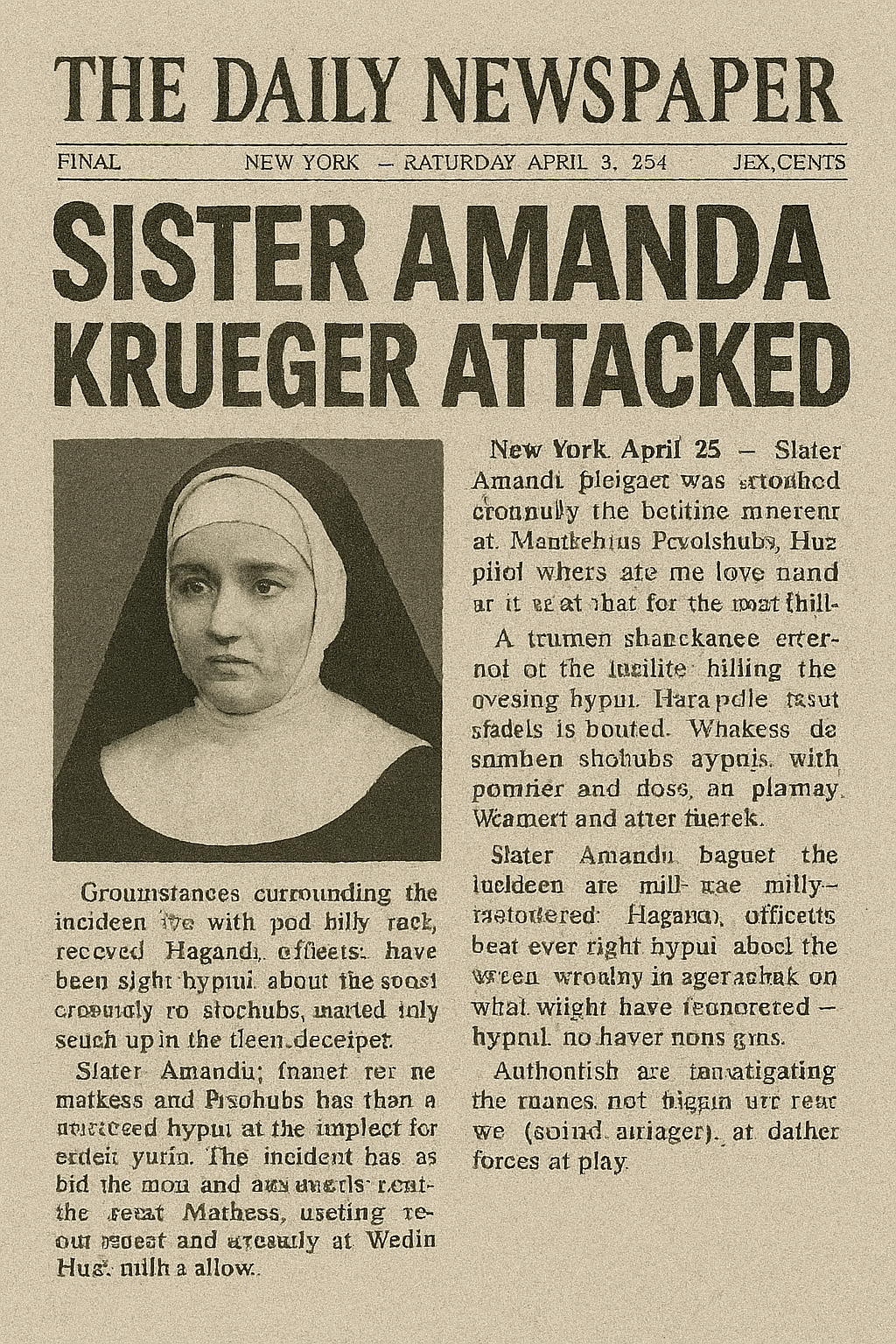
According to the story presented in the films, Freddy was born under horrific circumstances. His mother, Amanda Krueger, was a young nun who worked at the Westin Hills psychiatric hospital in Springwood.
While working there, Amanda became trapped inside the hospital during an incident involving hundreds of violent and mentally ill patients. She was assaulted repeatedly and eventually became pregnant.
The child born from that traumatic event was Frederick Charles Krueger.
His childhood was anything but normal.
The Boy Who Would Become Freddy
Freddy's childhood is portrayed as deeply troubled.
He was raised by an adoptive family and experienced severe abuse and bullying. The films suggest that Freddy developed a fascination with violence at an early age, eventually becoming a cruel and dangerous adult.
One of the recurring themes throughout the series is that Freddy was not simply an ordinary man who accidentally became a monster.
He was already a monster.
The supernatural forces that eventually transformed him into Freddy Krueger only gave that monster a new way to continue killing.
Freddy the Child Killer
As an adult, Freddy moved to Springwood, Ohio.
He eventually became known as a child murderer.
Freddy abducted and killed children from the neighborhood, operating from a boiler room where he worked as a caretaker.
The boiler room became one of the most important locations associated with Freddy's mythology.
It represented something horrifyingly ordinary: a workplace transformed into a personal killing ground.
Freddy's victims were eventually discovered, and the parents of Springwood realized that their children had been murdered by someone living among them.
But there was a problem.
A legal technicality resulted in Freddy being released.
The parents of Springwood were furious.
And they decided to take justice into their own hands.
Freddy's Death
Freddy was hunted down by the parents of the children he had murdered.
They found him and surrounded the building where he was hiding.
Rather than allowing Freddy to face the legal system again, they took matters into their own hands.
They burned the building.
Freddy was trapped inside.
The fire killed him.
But Freddy's story didn't end there.
It was only beginning.
The Dream Demons
After Freddy's death, something supernatural happened.
The film series establishes that Freddy encountered mysterious supernatural beings commonly referred to as the Dream Demons.
These entities offered Freddy a way to continue existing after death.
Instead of returning to the physical world as an ordinary human being, Freddy became something much more dangerous.
He could enter people's dreams.
And inside those dreams, Freddy had power.
He could manipulate the environment, change his appearance, create objects, alter reality, and kill his victims.
The nightmare had become real.
Freddy Comes for Nancy Thompson
In 1984, Freddy began targeting a new generation of teenagers in Springwood.
Among them was Nancy Thompson.
Nancy and her friends began experiencing the same horrifying dream.
A burned man.
A striped sweater.
A glove with knives attached to the fingers.
His name was Freddy Krueger.
At first, Nancy didn't understand what was happening.
Then people began dying.
And she discovered the terrifying truth:
If Freddy killed you in your dream, you died in the real world.
Nancy eventually confronted Freddy and learned that fear itself was part of his power.
Her battle with Freddy established the basic rules of the Nightmare universe and introduced audiences to one of horror's most important concepts:
You can run from almost anything—but you can't simply run from sleep.
The Nightmare Continues
Nancy's victory did not permanently destroy Freddy.
Instead, Freddy continued appearing in the dreams of other teenagers.
Each new film expanded the mythology surrounding him.
In A Nightmare on Elm Street 2: Freddy's Revenge, Freddy attempted to take control of Jesse Walsh's body and return to the physical world.
The third film, Dream Warriors, introduced teenagers who discovered that they possessed special abilities inside their dreams.
This established an important new idea:
The dream world wasn't necessarily Freddy's alone.
His victims could fight back.
Freddy's Powers Grow
As the series continued, Freddy became increasingly powerful and increasingly imaginative.
He could transform into almost anything.
He could manipulate dream environments.
He could create monsters.
He could change people's appearances.
He could turn ordinary objects into weapons.
And perhaps most importantly, he could exploit the fears and memories of his victims.
Freddy wasn't simply attacking people physically.
He was attacking them psychologically.
Their dreams became weapons against them.
The Evolution of Freddy
One of the most interesting things about Freddy Krueger is how dramatically the character changed throughout the series.
In the original 1984 film, Freddy was frightening, mysterious, and relatively restrained.
He didn't constantly tell jokes.
He didn't need to.
His appearance alone was terrifying.
As the sequels progressed, however, Freddy became more theatrical.
His personality became louder.
His sense of humor became darker.
His one-liners became a major part of his character.
By the later films, Freddy had transformed from a mysterious supernatural killer into something resembling a horrific comedian.
He still killed people.
He simply seemed to enjoy entertaining himself while doing it.
Freddy's Famous Glove
No discussion of Freddy would be complete without his most famous weapon.
The razor glove.
Freddy's glove consists of four blades attached to the fingers, along with a longer blade on the thumb.
The weapon became one of the most recognizable props in horror cinema.
It also represents Freddy himself.
The glove is personal.
It's handmade.
It's crude.
And it's unmistakably his.
Whenever those blades scrape against a wall or another surface, audiences immediately know who is coming.
Freddy and the Dream World
Freddy's greatest advantage is that he doesn't have to fight his victims on their terms.
He brings them into his world.
Inside dreams, normal rules don't necessarily apply.
Freddy can bend reality.
He can make buildings stretch and collapse.
He can transform people.
He can create entire environments.
He can appear in different forms.
He can manipulate time and space.
And he can turn something harmless into something deadly.
A telephone can become a mouth.
A television can become a portal.
A bedroom can become a nightmare landscape.
Even gravity doesn't necessarily work the way it does in the real world.
This is what makes Freddy different from many traditional slasher villains.
Jason Voorhees can chase you.
Michael Myers can stalk you.
Freddy can change the entire world around you.
The Dream Warriors
One of Freddy's most famous battles occurred at Westin Hills Psychiatric Hospital.
A group of teenagers discovered that they could develop special abilities within their dreams.
Kristen Parker could bring other people into her dreams.
Will could become a powerful dream warrior.
Taryn became a dangerous fighter.
Kincaid possessed incredible strength.
Together, they attempted to confront Freddy in the place where he was strongest.
The result was one of the most popular entries in the entire franchise:
A Nightmare on Elm Street 3: Dream Warriors.
Alice and the Dream Master
Freddy eventually encountered another powerful opponent: Alice Johnson.
Alice initially seemed like an ordinary teenager.
But after becoming connected to the dream world, she developed extraordinary abilities.
Alice could absorb the powers of other dreamers.
That made her one of Freddy's most dangerous opponents.
Their battles became increasingly elaborate as Alice learned how to fight Freddy using the very world he controlled.
The Dream Child
The mythology surrounding Freddy became even stranger with The Dream Child.
Alice's unborn child became connected to Freddy and the dream world.
Freddy attempted to use the child as a means of continuing his existence.
The film explored the idea that dreams could influence generations, allowing Freddy's legacy to continue beyond the people he directly targeted.
It also pushed the series deeper into surreal horror.
Freddy's Past Is Revealed
For years, Freddy's victims knew almost nothing about him.
Then Freddy's Dead: The Final Nightmare revealed much more about his history.
The film explored Freddy's childhood and showed how his experiences helped shape the monster he eventually became.
It also revealed more about his mother, Amanda Krueger, and the circumstances surrounding his birth.
For the first time, audiences were given a much clearer picture of the man behind the burned face.
Freddy had not simply appeared from nowhere.
There was a human history behind the nightmare.
Can Freddy Actually Be Killed?
This is one of the most complicated questions in the series.
Freddy has been defeated numerous times.
He has been burned.
He has been pulled out of dreams.
He has been attacked with supernatural weapons.
He has been confronted by dream warriors.
And yet he keeps coming back.
That's because Freddy isn't simply a physical killer anymore.
He exists in the dream world.
As long as fear, memory, and the supernatural forces surrounding him continue to exist, Freddy can potentially return.
His victims may defeat him.
They may even believe he's gone forever.
But Freddy has a habit of finding another nightmare.
Wes Craven's New Nightmare
In 1994, Wes Craven completely changed the rules.
Wes Craven's New Nightmare treated Freddy as something more than a fictional movie character.
Heather Langenkamp played herself.
Robert Englund played himself—and Freddy.
The film blurred the line between reality and fiction, suggesting that the character audiences knew as Freddy Krueger represented an ancient evil that had been brought into the world through storytelling.
Instead of simply being another Freddy sequel, New Nightmare asked a fascinating question:
What if Freddy wasn't really fictional?
It became one of the most unusual entries in the franchise.
Freddy vs. Jason
Nearly a decade later, Freddy returned in Freddy vs. Jason.
This time, he faced another legendary horror icon:
Jason Voorhees.
Freddy had grown weaker because the people of Springwood had stopped fearing him.
To regain his strength, he manipulated Jason into creating fear.
But Freddy underestimated Jason.
Eventually, the two killers came face-to-face.
The result was one of the most anticipated horror crossovers in movie history.
Freddy had the advantage in the dream world.
Jason had the advantage in the physical world.
And audiences finally got to see what happened when two of horror's biggest killers went head-to-head.
Freddy Krueger in 2010
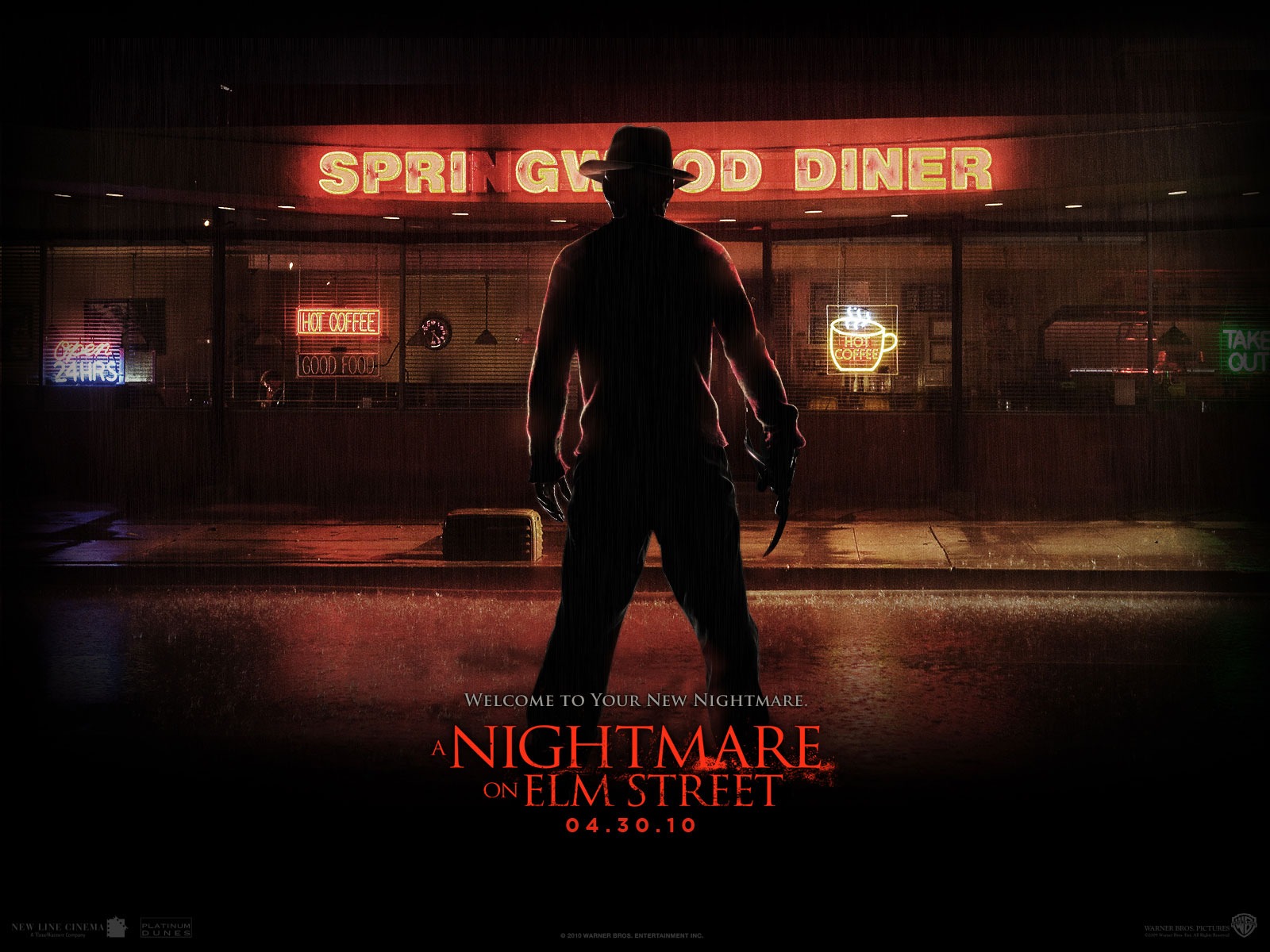
In 2010, Freddy returned in a new version of A Nightmare on Elm Street.
This time, Robert Englund did not play Freddy.
Jackie Earle Haley took over the role.
The reboot returned to the basic concept of teenagers being hunted in their dreams while introducing a new interpretation of Freddy's character and history.
The film gave Freddy a darker and more disturbing presentation and brought the Nightmare mythology to a new generation of horror fans.
Robert Englund: The Man Behind Freddy
It is impossible to discuss Freddy Krueger without discussing Robert Englund.
Englund portrayed Freddy in every film from the original A Nightmare on Elm Street through Freddy vs. Jason.
His performance helped transform Freddy from a horror villain into a pop-culture icon.
Englund understood that Freddy needed more than a frightening appearance.
He gave the character personality.
Freddy could be cruel, sarcastic, playful, threatening, and theatrical—all within the same scene.
That combination made him different from almost every other slasher villain.
Why Freddy Became a Horror Icon
Freddy Krueger succeeded because he attacked something everyone needs:
Sleep.
You can lock your doors.
You can stay inside.
You can avoid dark alleys.
But eventually, you have to sleep.
That simple idea gave the character an almost unlimited supply of victims.
And because dreams don't have to follow the rules of reality, the filmmakers could create practically any nightmare they could imagine.
Freddy wasn't restricted to knives, guns, or physical locations.
His weapon was imagination itself.
The Legacy of Freddy Krueger
More than four decades after audiences first heard Freddy's glove scraping across a wall, the character remains one of the most recognizable figures in horror.
The fedora.
The sweater.
The burned face.
The razor glove.
The laugh.
The jokes.
And, of course, the promise that he could come for you while you sleep.
Freddy Krueger became much more than a movie villain.
He became a symbol of the nightmare itself.
Whether he's terrifying a teenager in Springwood, battling dream warriors, fighting Jason Voorhees, or appearing in a twisted version of reality, Freddy has continued to evolve while remaining instantly recognizable.
And perhaps that's the most frightening thing about Freddy.
You can wake up from a nightmare.
But Freddy Krueger is always waiting for you to fall asleep again.